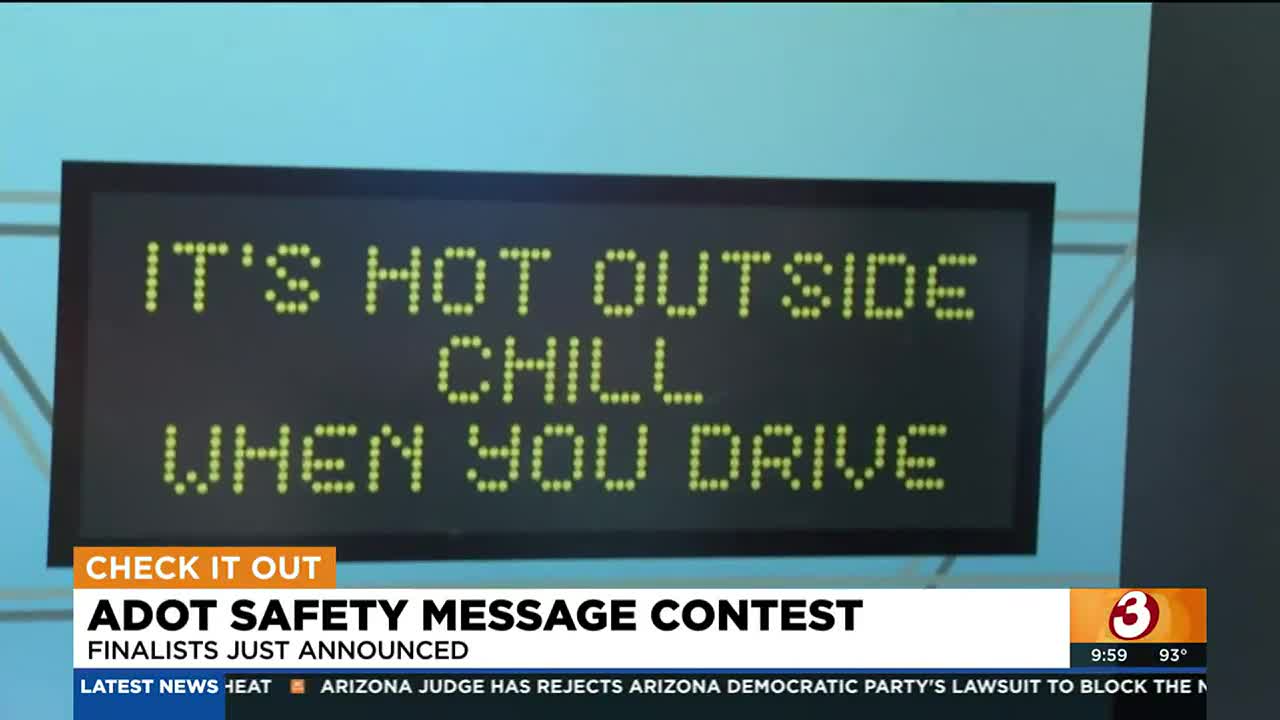
Arizona Road Safety Slogan Contest and Public Reaction
The recent Arizona Department of Transportation safety slogan contest has sparked a whirlwind of opinion, laughter, and debate among both drivers and critics alike. What began as an effort to fill highway signs with quick, memorable safety messages quickly morphed into a delightful clash of humor, controversy, and free expression. In the mix of witty wordplay and edgy submissions, the contest has become a fascinating lens through which we can examine how public agencies balance safety messaging with creative outreach.
At its heart, the contest was designed to inject a spark of humor into the usually straightforward world of road safety signs. Yet when over 3,000 entries flooded in, many of them proving to be a mix of clever puns, pop culture references, and even some messages that were downright off the wall, it became clear that the public was keen to get into the playful spirit—a clear sign that drivers are not only interested in straightforward safety reminders but also in a tongue-in-cheek nod toward the everyday frustrations and eccentricities of road life.
How a Highway Safety Contest Became a Vehicle for Humor and Commentary
Highway safety signs often serve as the unsung heroes of daily travel; they are the quick, pithy messages that remind all of us to drive with care. However, these signs are rarely celebrated as works of art. Instead, their main mission is to offer simple, no-nonsense advice that helps keep drivers safe. The contest initiated by Arizona’s transportation agency was meant to refresh this form of communication by incorporating a touch of humor and creativity.
By opening the contest to the public, the state invited ordinary citizens—and those with a penchant for clever wordplay—to take the wheel. In doing so, the contest blurred the lines between a serious public safety campaign and a satirical expression of drivers’ shared frustrations. It allowed participants to poke around the rulebook of standard motorist caution and submit messages that were not only memorable but also sometimes downright funny.
For some, these slogans were nothing more than a quirky deviation from the norm. For others, they reflected deeper ideas about authority, responsibility, and the unpredictable nature of modern driving culture. Whether it was the groan-inducing “Fast and Furious” shoutout or an equally blunt sign aimed at admonishing slow drivers, the submissions offered an eclectic mix that was as entertaining as it was thought-provoking.
The Purpose and Impact of Highway Signs in Modern Communication
We often take road signs for granted. These simple posters along our highways are meant to direct us, warn us, and remind us to act in a way that protects everyone on the road. Yet, as society has evolved and humor has found its way into nearly every aspect of public life, even these utilitarian objects have become canvases for creative expression.
By turning the contest into an opportunity for humorous submissions, the Arizona Department of Transportation inadvertently highlighted the dual role that public signage can serve. On one hand, they are the bearers of critical safety messages; on the other, they become a medium for social commentary and even self-deprecation. This dual purpose underscores the challenging parts and tangled issues agencies face when trying to deliver a message that is both effective and engaging.
In a world where nearly every public service message competes with bright digital screens and fast-paced social media feeds, finding a balance between clear instruction and light-hearted humor can be a tricky task indeed. The contest, intentionally or not, has opened up a dialogue about the best ways to get a message across without overwhelming or alienating the target audience.
Exploring Public Reaction: Humor Versus Controversy
When the slogan suggestions began to roll in, it became evident that not every entry was destined for the highway. While many suggestions were amusing and harmless—a playful nudge for slow drivers or a clever twist on famous movie titles—others sparked controversy. A number of submissions included language or references that many found intimidating or even off-putting.
This mix of crowd-sourced creativity demonstrated just how loaded public contests can become. On the one hand, humorous entries appealed to many by offering a moment of levity during the daily grind of commuting. On the other hand, some submissions already crossed the line into territory that could be considered full of problems or even dangerous from a societal perspective.
The controversy was particularly evident in slogans that referenced polarizing figures or used profanity in a public safety message. For instance, while humorous references to movies garnered a chuckle, messages laced with expletives or alluding to political figures stirred up debates about appropriateness and the risk of alienating certain groups of drivers. This tug-of-war between humor and controversy has left many wondering if public agencies should put stricter controls on submissions or lean into the raw, unfiltered creativity of the online community.
Legal and Social Implications of Controversial Slogans
The contest did more than just showcase public humor. It also inadvertently highlighted the difficult legal bits and tangled issues that emerge when free expression meets government-sponsored messaging. Submissions that contained hate speech or overtly offensive language prompted discussions about what constitutes free speech versus what might cross into the realm of inciting division or recklessness.
There is a fine line to be drawn between creativity and messages that could be construed as inflammatory. Legal experts weighed in on whether public agencies, in their role as safety messengers, have a responsibility to filter out entries that might be seen as encouraging risky behavior or even promoting bigotry. These discussions are far from over, as policymakers continue to grapple with how to protect public safety while also upholding the principles of free expression.
A review of the rejected slogans revealed not only the humorous but also the nerve-racking twists and turns that can occur when public sentiment is mixed. The fact that a request was made for all the submissions through a public records request further underscores the importance of transparency in these processes. It shines a light on the need for public agencies to be accountable and to manage their way through the complicated pieces of public engagement.
The Humor in Highway Slogans: A Closer Look at the Accepted and Rejected Entries
Among the thousands of entries, only two slogans made the cut for display on the Loop 202 highway near Buckeye. The selection leaned toward messages that, while containing playful references such as those echoing the “Fast and Furious” franchise, still carried something of a cautionary note for drivers. These winners exemplify how humor can be a vehicle for delivering important reminders—encouraging drivers to stay out of the fast lane on Sundays, for example.
On the flip side, many rejected entries were equally noteworthy for their audacity and creative flair. Some of these submissions were full of playful puns, others decked in profanity, and still others introduced elements from unexpected cultural or political references. Here are some of the main categories that emerged:
- Pop Culture Mashups: Entries that combined well-known movie titles or song lyrics with safety-related messaging.
- Blunt Warnings: Slogans that left little room for ambiguity, urging drivers to “vacate” the fast lane without subtlety.
- Controversial Allusions: Suggestions that incorporated politically charged language or direct, expletive-laden messages.
- Playful Word Twists: Submissions that bent language with humorous puns, catching drivers off guard in a light-hearted way.
Even though many rejected slogans were simply too “out there” to be used on public infrastructure, they serve as a reminder of both the enduring appeal of humor and the challenges of filtering through slick wordplay for something truly effective. They act as a repository of the public’s raw creativity—a mix that is both entertaining and, at times, puzzling.
Public Records Requests and the Drive for Transparency
The request by a local news organization to obtain every slogan suggestion submitted in the contest is a notable example of public oversight. This move to dig into the full list of entries not only met with enthusiastic responses from those in favor of transparency but also underscored how public scrutiny is essential when government agencies run open competitions.
The public records request revealed a treasure trove of submissions that ranged from hilarious to downright inflammatory. By making this information public, citizens have the opportunity to see exactly how their creative—and sometimes unruly—submissions were handled, sparking further debate about the appropriate balance between free speech and responsible oversight.
This level of openness is super important because it ensures that government agencies remain accountable for the messages they choose to broadcast. At a time when trust in public institutions is often on edge, such transparency helps build a bridge of trust between the public and the agencies responsible for our safety.
Creative Advertising Controversies and the Role of Public Humor
In today’s world, where we are constantly bombarded with advertising messages and digital ads, the line between serious public safety announcements and creative advertising can be quite blurred. The slogan contest serves as an excellent case study in the challenges that arise when creativity meets official communication.
The contest showed that humor can serve as an effective tool not only in advertising products but also in disseminating public safety messages. However, it also revealed that sometimes the boundary between a clever joke and an offensive remark can be razor-thin. The public’s reaction to these entries was mixed, with some applauding the humor and others warning that certain messages could lead to unintended consequences on the roads.
A detailed review of the process reveals several key steps that public agencies need to consider when managing similar contests:
- Setting Clear Guidelines: To prevent potentially off-putting or inflammatory entries, clear parameters must be outlined from the outset.
- Anonymized Submissions: In some cases, removing the identities of the submitters might help reduce bias and focus more on the content itself.
- Expert Oversight: Bringing in public relations or legal experts to review submissions can help flag content that, while creative, might cause more harm than good.
- Public Accountability: Making the process transparent through public records requests and community feedback can boost trust and reduce the chance of controversial messages slipping through.
These steps underscore the importance for agencies to figure a path that is both open and responsible. When dealing with public safety, any message—no matter how humorously presented—must be vetted carefully to avoid the possibility of misinterpretation or even legal repercussions.
Reading Between the Lines: Cultural Reflections and Humor in Road Safety
Humor, as showcased in this contest, reflects much more than a few funny words carved on a highway sign. It represents a cultural dialogue where the public feels empowered to comment on the everyday realities of driving. The rejected entries, in particular, hint at a collective desire to poke around the official narratives and point out the sometimes intimidating or overwhelming ways authorities impose rules and guidelines on personal freedom.
In this light, the contest is not just about highway safety—it’s about the role of humor in public discourse and how everyday citizens engage with policies that directly affect their lives. Far from being a mere sideshow, the reactions to these entries are a barometer for the current cultural mood, revealing underlying tensions and the need for a more human approach to public messaging.
The creative outpouring also underscores that while messages can be funny, they have to be crafted with an understanding of their potential impacts. Humor is a powerful tool in social commentary, but if it strays into the realm of the offensive or the misinterpreted, it can sidetrack the intended purpose of keeping drivers safe.
Managing Creative Campaigns: Lessons for State Departments of Transportation
For state agencies responsible for public safety announcements, the contest offers many lessons. One key takeaway is the importance of managing creative campaigns so that they do not lose sight of their main purpose—ensuring the safety of the driving public. The balance between a quirky sign that brings a smile to a driver’s face and a clear, direct warning is a tightrope walk.
There are several tricky bits that need careful consideration:
- Balancing Creativity and Clarity: While a clever pun might be memorable, it should not obscure the primary safety message.
- Filtering Controversial Content: Agencies need to set up measures to gently steer submissions away from areas that could be seen as provocative or divisive.
- Engaging Experts: Working with communication professionals can ensure that the final output retains a professional tone while still engaging the public’s sense of humor.
- Transparency in Selection: As evidenced by the public records request, making the process clear can also help preempt criticism and build community trust.
By embracing these lessons, public agencies can better figure a path through the challenging parts of public campaigning. There is a super important need to consider every little detail, from the subtle parts of language to the overall tone of the message. Doing so can mean the difference between a sign that is simply ignored and a sign that genuinely resonates with drivers.
The Challenges of Crowdsourcing Creativity
The crowdsourcing of safety slogans is a double-edged sword. On one edge, it democratizes the creative process, allowing ordinary citizens to have a voice in something that affects them daily. On the other, it opens the door to a wide range of submissions—some ingenious, and others downright questionable.
Among the benefits, crowdsourcing provides a vast pool of ideas that might never emerge from the confines of a conventional advertising team. It taps into the collective wit of the community, generating slogans that reflect the drivers’ true sentiments and even their frustrations. However, the downside is that with such open submissions, the agency must be prepared to manage a flood of entries that are sometimes full of problems or even downright nerve-racking in their audacity.
In addition, the sheer volume of submissions requires significant effort in sorting out which ideas are both creative and appropriate. The process of reviewing thousands of entries to pick just a handful that are both effective and acceptable is a task loaded with challenges. This is where public oversight and professional editing—like that provided by investigative journalists—can prove indispensable.
When weighing the benefits against the drawbacks, the overall experience offers a useful case study in the potential and pitfalls of open, public competitions. It serves as a reminder that while people are eager to chip in their ideas, the responsibility of ensuring public safety must always remain paramount.
The Role of Humor in Shaping Public Policy and Communication
The contest clearly illustrates the powerful role that humor plays in shaping public policy and communication. Humor has the unique ability to make heavy, sometimes intimidating issues feel a bit more manageable. By turning safety messages into something that drivers can smile about, agencies might be able to engage audiences that would otherwise be indifferent to conventional warnings.
Yet, in doing so, there is a risk. Humor that relies too heavily on edgy or controversial content may overshadow the message itself, turning what should be a straightforward safety reminder into a subject of public debate. This is especially true when the humor involves subtle details or little twists that some might find confusing or inappropriate.
The key, therefore, is to use humor in a way that enhances the message rather than detracts from it. Public safety communications should always strive to be clear, direct, and easily understood even as they entertain. This balance is far from easy to achieve, but it is essential for effective messaging in a modern, media-saturated world.
Future Implications for Transportation Messaging Campaigns
The lessons learned from this slogan contest have far-reaching implications for future transportation messaging campaigns. As agencies think about innovative ways to connect with the public, there is an opportunity to embrace creative outreach while remaining mindful of the potential missteps.
Moving forward, state departments of transportation may look to refine their submission guidelines. This might include a more detailed review process, stronger filtering of entries before a contest goes live, or even a new approach to crowdsourcing ideas that invites additional professional oversight. By doing so, agencies can better steer through the many twists and turns of public communication, ensuring that every sign not only captures attention but also delivers its critical warning in a clear and respectful manner.
In an age where public opinion can shift quickly and social media can amplify a single misstep, it is essential that government agencies take their time to carefully figure a path through the creative process. This involves coordinating with legal experts, public relations teams, and even citizen panels to ensure that every message meets a set of standards that protect public safety and promote community trust.
Editorial Reflection: Humor, Free Speech, and Public Safety
From an editorial perspective, the Arizona safety slogan contest is a microcosm of larger societal issues. It raises intriguing questions about the role of humor in public discourse, the ways in which free speech is expressed in everyday life, and the challenges of integrating citizen input into formal public policy.
One can appreciate the energy and creativity that went into so many of the submissions. While a few entries might have been too much for the highways of Arizona, many others demonstrated the public’s desire to push back against bureaucratic stiffness with a bit of irreverence. The contest ultimately challenged both the DOT and the general public to examine how humor and responsibility can coexist—even on something as ostensibly mundane as a highway sign.
This dialogue is both necessary and valuable. It encourages government agencies to get into the nitty-gritty of public expectations, allowing them to fine-tune their messages in a way that is clear and engaging. And it allows citizens to voice their opinions, however cheekily, about the policies that affect their day-to-day lives.
For the future, a measured approach that respects both the humorous and the serious aspects of road safety should be considered a must-have in public messaging. In a time when communication is becoming ever more interactive and citizen-driven, it is critical for officials to incorporate feedback and adapt their methods accordingly.
Tables of Key Considerations and Lessons Learned
| Key Factors | Description |
|---|---|
| Creativity vs. Clarity | Ensuring that humorous elements do not override the essential safety message. |
| Guideline Stringency | Setting clear parameters to filter out potentially inflammatory or overly provocative submissions. |
| Transparency | Making the review and selection process open to public scrutiny to build trust. |
| Legal Oversight | Coordinating with legal experts to ensure submissions neither cross legal boundaries nor incite division. |
| Public Engagement | Encouraging citizen input while balancing it with the professional demands of public safety messaging. |
The table above encapsulates some of the super important considerations that should guide future regulatory campaigns. Each factor represents one of the many tangled issues that must be contended with when trying to develop a message that is both engaging and responsible.
Public Engagement and the Future of Crowdsourced Communication
One of the most striking aspects of the contest is how it underscores the value of engaging with the community. In an era marked by interactive communication and user-driven content, government agencies have a unique chance to allow everyday citizens to contribute to important public messages. Crowdsourced campaigns can lend an authentic, ground-level perspective that traditional messaging might miss.
Nonetheless, this openness also introduces challenges. With thousands of voices chiming in, the process of sorting out what is useful and what is potentially harmful becomes a nerve-racking exercise in filtering and moderation. The task is to ensure that while the creative voices are heard, the final output remains focused on protecting and guiding the public effectively.
What is clear, however, is that states and municipalities that choose to engage with the public in this way must be prepared for a range of responses—from outright laughter to heated debate. The benefit, though, is that such engagement can lead to more community-driven decision-making that feels authentic and relatable.
Finding a Middle Ground Between Artistic Expression and Public Safety
At the core of this discussion lies the question: How can public agencies effectively merge artistic expression with stringent safety protocols? The answer, it seems, involves a delicate balancing act that respects both the creative impulses of the community and the critical need for clear, direct safety warnings.
Some suggestions for achieving this balance include:
- Enhanced Review Panels: Establishing committees that include creative professionals, legal advisors, and public safety experts can help weed out problematic content before it reaches the public.
- Iterative Feedback Loops: Incorporating a system where the community can comment and vote on preliminary ideas helps ensure broader approval and minimizes the risk of alienation.
- Regular Updates to Guidelines: As cultural norms evolve, so too should the standards for what is acceptable on public signage. Reviewing and updating guidelines periodically will help keep the messaging relevant and respectful.
These approaches are not without their own challenges, but they represent hopeful steps toward finding a middle ground where the public’s creativity can shine without compromising essential safety messages.
Balancing Humor, Safety, and Public Sensibilities: Final Thoughts
The Arizona highway safety slogan contest is more than just a quirky foray into humor—it is a bold experiment in how governments can interact with the communities they serve. It demonstrates that even in the realm of public safety, there is room for a dash of humor, self-awareness, and cultural commentary. However, it also illustrates the tricky parts involved in managing public input, ensuring messages remain clear, and navigating the subtle details that make or break a public campaign.
For officials and citizens alike, the contest is a reminder that while humor can help lighten the load of daily commutes and maybe even prompt safer driving habits, it must be deployed with care. The fine line between a laugh and a loss of credibility is a dense network of little twists and fine shades, and public safety should never be compromised in the process.
As we move forward, it is critical that public agencies use experiences like this to refine their approaches. By tapping into the creative energy of the crowd while carefully managing the inevitable pitfalls that come with free expression, there is an opportunity to turn even a light-hearted contest into a model of transparency, accountability, and meaningful engagement.
Ultimately, the conversation sparked by the contest is an invitation to all of us—officials, citizens, and journalists alike—to figure a path through the maze of public communication. Whether you view the rejected slogans as a harmless dose of irreverence or as a reminder of the perils of unchecked public expression, there is no denying that they have provided a fascinating glimpse into modern society’s ongoing dialogue about safety, humor, and responsibility on our roads.
This dialogue, filled with its own set of challenges and unexpected turns, is one that will undoubtedly shape future campaigns and policies. In a world where every message matters, finding the right balance between wit and wisdom is not just a creative exercise—it is an essential part of building safer, more engaged communities.
Concluding Thoughts on the Role of Humor in Public Messaging
In closing, the road safety slogan contest serves as a compelling reminder that even among the everyday tools of public service, there lies an opportunity for innovation and expression. As drivers zip along the highways of Arizona, the messages they pass by are more than just directives—they are reflections of our collective culture, complete with all its playful, problematic, and sometimes puzzling components.
It is our hope that by carefully integrating humor with clear, direct communication, public agencies can craft messages that not only educate but also resonate deeply with the modern driver. For many, the contest is a microcosm of larger conversations about free speech, community engagement, and the role of government in our daily lives—a topic that will continue to be as lively as the roadways themselves.
As we look to the future, let us encourage dialogue, embrace creativity, and never lose sight of the critical responsibility to keep our roads safe—all while appreciating the simple joy of a well-turned phrase that makes us smile as we steer through life’s many twists and turns.
Originally Post From https://www.phoenixnewtimes.com/news/wildest-signs-rejected-arizona-highway-safety-contest-40620164/
Read more about this topic at
25 Great Road Safety Slogans for You
Wild Highway Quotes by Devney Perry


Social Plugin